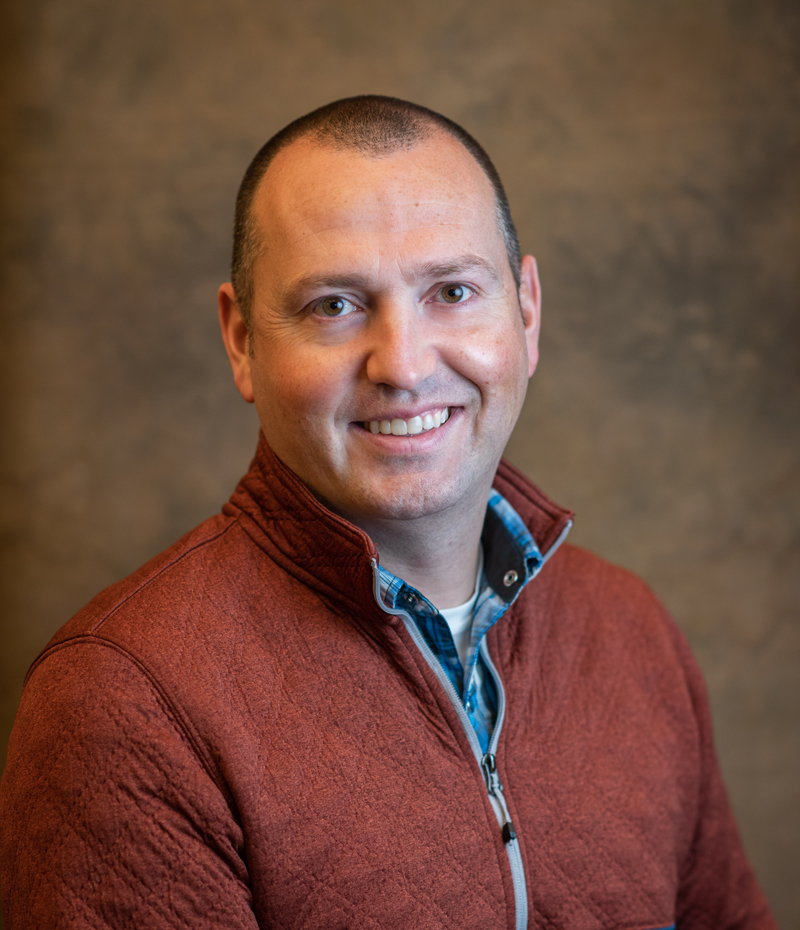
Lenny Probert is known as "quite the character" at the St. Charles Family Care Clinic in Sisters. During a recent wellness visit, he rolled in for his 2 p.m. appointment with sunglasses on and announced to the registration clerk, "I just woke up." He has a bold sense of humor, filled with self-deprecating honesty. He also has stage IV kidney disease and will likely soon need dialysis treatment.
"I'm feeling like I'm getting real old, real quick,” he said. “It's one thing after another."
As a patient with multiple health issues and a limited ability to care for himself, Probert works with a team of care providers as part of St. Charles Family Care in Sisters, which is a Patient-Centered Primary Care Home (PCPCH). The PCPCH is a collaborative care model that focuses on coordinating patient care among a team. A patient's health care team might include a behavioral health consultant, a community health educator, a nurse care coordinator and a clinical pharmacist who work together with the provider as an integrated support network. This allows issues to be addressed that fall outside of the typical spectrum of clinical care.
"We do a lot of problem solving," said Heather Lasecki, a primary care consultant and member of Probert's care team. "It's teamwork, working as a tribe and thinking outside the box and outside the clinic." Probert’s care team also includes Community Health Educator Chloe Fief and Nurse Care Coordinator Gwen Hanson.
Probert’s care plan extends beyond the traditional doctor visit. During one of his recent check-ins with Lasecki, Probert mentioned his fear of dialysis and asked if she might go with him to see what dialysis is like. So, Lasecki pulled together the care team and they arranged a field trip to the dialysis center.
"It could be a while before he needs dialysis and we didn't want to scare him, but we wanted him to know what was ahead," said Lasecki. "I could have spoken to him about it, but it wouldn't have been as real. He needed to see it with people he trusts."
They toured the center and talked frankly about his health and how it will determine what the future looks like.
"It just shocked me," said Probert. "The sight of the beds and machines and people laying around.
They explained to me what was going on and how I was feeling and how it was normal. It was a good experience."
Lasecki said she’s confident Probert will follow his treatment regimen, which will “hopefully work to prolong the need for dialysis.”
Probert also has a monthly appointment for the team to organize his medications into daily doses.
"I've got so many, I don't trust myself," Probert said.
Contact with the team is frequent—in fact, when Probert recently missed an appointment and wasn’t answering his phone, members of his care team went out to look for him and were there at his house when he returned from a walk.
"They're so good to me," said Probert. "They're on my side. They're real people. That's why I like them so much.”
The Oregon Health Authority recently audited the Sisters clinic to assess its PCPCH status and awarded it enough points to earn a Tier 4 (out of 5) recognition. The recognition criteria includes access to care, accountability, whole-person care, continuity, coordination and integration and person-and family-centered care.
“They care. They listen,” said Probert. “I think they're all pretty special.”